Environmental education has a persistent problem: it too often lives only on paper. Lessons are taught, facts are memorized, and yet many young people walk away from those lessons feeling something closer to helplessness than empowerment. They understand the scale of the climate crisis, but rarely feel like they have any real power to respond to it. Discovering New Artists set out to change that equation — not by teaching more facts, but by giving young people a way to act.
That response is the International Environmental Art Challenge (IEAC): a global initiative that fuses art, environmental awareness, and tree plantation into a single, unified mission. Rather than treating creativity and environmental responsibility as separate pursuits, IEAC brings them together, uniting young artists from over 25 countries around one shared belief — that art has the power to drive real, positive change in the world. Every edition of the challenge is anchored in the United Nations Sustainable Development Goals, with a carefully chosen theme that asks participants to translate environmental responsibility into visual expression.
But IEAC doesn’t stop at inspiration — it insists on impact. For every two artworks submitted, DNA plants one tree, transforming each and every entry into something concrete: a real, physical contribution to the planet, not just a symbolic gesture. Creativity, in this model, doesn’t end on the canvas. It ends in the ground.
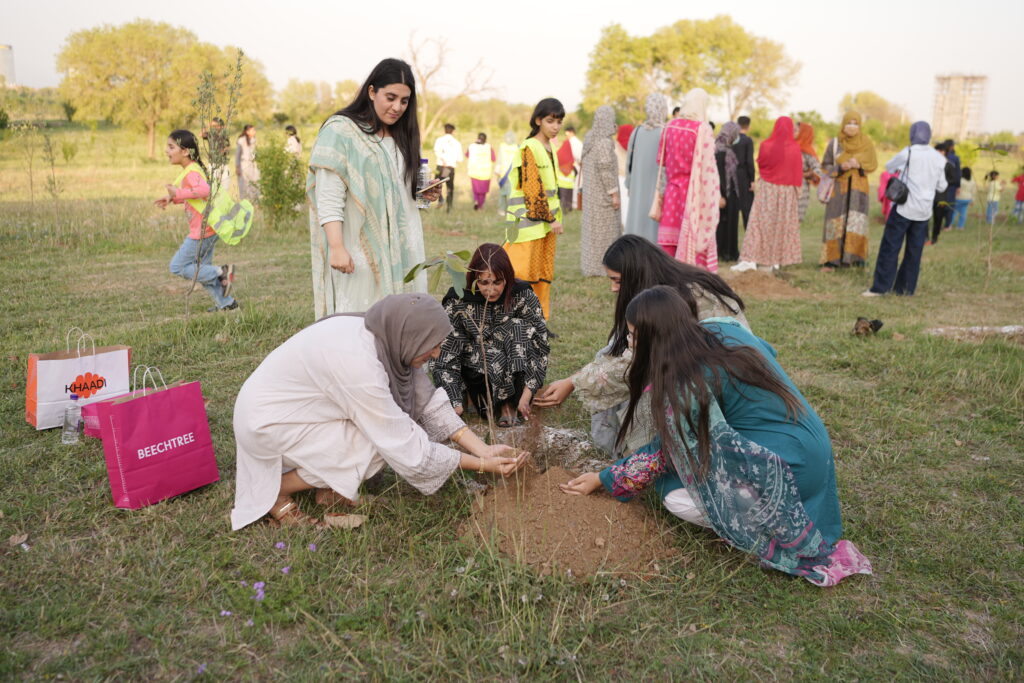
That commitment was tested — and proven — in a real-world moment of urgency. When approximately 100 paper mulberry trees were cut down in Islamabad, DNA didn’t just note the loss. It acted. Partnering with leading organizations, including the Queen Elizabeth II Commonwealth Trust Pakistan Chapter, DNA helped plant over 400 trees in F-9 Park — more than quadrupling what had been lost. What could have been a story of environmental damage became, instead, a story of restoration and resilience, multiplied several times over.
That moment captures exactly what IEAC represents: proof that a generation often labeled anxious or disempowered about climate change is, in fact, ready to lead. Through IEAC, young artists across the world are discovering that their creativity isn’t just an emotional outlet — it’s a tool for tangible, measurable environmental impact. One artwork, one tree, one small act of restoration at a time, IEAC is turning creative expression into a global movement for change.